Reduce burnout-driven turnover in your care team.
Your team isn't just stressed.
They've lost themselves in the role.
Stop losing good staff to emotional exhaustion.
Why doesn't standard wellbeing training work for care staff?
Most wellbeing programmes teach staff to cope better with exhaustion.
Life After Care does something different: it rewires the relationship between the person and the pressure, at the level of the nervous system and the brain.
52%
Social workers job-hunting cite their mental health as a key reason¹
¹ Community Care / regulator workforce survey (2024)
See more about the Programme ↓
73%
UK care workers who report high emotional exhaustion¹
¹ Community Care, Burnout in Social Work — via The Access Group
£4.70
Average return for every £1 invested in workforce mental health³
³ Deloitte, Mental health and employers (2024)
This isn't a stress problem.
It's an identity erosion problem.
Care workers don't burn out because the work is hard. They burn out because the constant giving, with no way to truly close the shift, slowly hollows out who they are outside the role.
→Emotional exhaustion from chronic exposure to trauma and distress
→Carrying work home: sleep disrupted, relationships strained
→Expected to perform at full capacity while running on empty
→Disconnected from who they are beyond the job title
→Increased sick days, high turnover, reduced quality of care
→Generic wellbeing initiatives that last two days then fade
"The problem isn't that care workers can't cope. It's that no one has given them a tool that works at the depth the problem actually lives."
— Jan Heller, Founder, Tracksuit Yogi
Most solutions focus on policies and procedures. This one focuses on the human being doing the job. Specifically, on what's happening in their brain and nervous system.
This isn't ordinary meditation.
What is non-dual awareness meditation?
Life After Care is built on non-dual awareness (NDA): a form of meditation that neuroscience research identifies as producing a fundamentally different, and deeper, set of brain changes than standard mindfulness.
Standard Mindfulness
Teaches you to manage stress
You learn to observe thoughts and feelings without reacting. The thinking brain gets better at turning down the alarm when it fires. Useful - but effortful, and the alarm is still set at the same level.
The Result for Your Team
Not coping better. Actually feeling different.
Staff report not just feeling calmer, but experiencing a genuine shift in how connection feels: less depleting, more sustaining. The work doesn't change. Their relationship to it does.
Non-Dual Awareness Meditation
Changes what triggers the alarm in the first place
Research shows NDA reorganises how the brain processes the boundary between "me" and "everything else." The chronic tension of the giver-receiver split, the root of care worker exhaustion, begins to dissolve at a neurological level.
Why does this approach work long-term when other training doesn't?
Built into the brain, not dependent on circumstances
Unlike relaxation techniques that only work when things are calm, NDA builds a new baseline in the nervous system. Studies show lasting changes to brain structure after regular practice, not just temporary relief.
What actually changes
in the brain.
You don't need to know neuroscience. Here's what the research shows, in plain English:
What we're looking at:
Default Mode Network: The "daydream & worry" part of the brain
Intrinsic vs. Extrinsic networks: "Me" vs the rest of the world
Amygdala: The stress alarm
Prefrontal Cortex: Focus & decision-making
Precuneus: Sense of self
Self-boundaries: Long-term change
Standard Mindfulness:
Gets quieter = less mental chatter
These two pull further apart = teams competing harder
Thinking brain learns to turn the alarm down when it fires
Gets stronger through repetition, just like gym reps
You get better at watching yourself
Non-Dual Awareness (NDA):
Gets rewired: the storytelling machine changes how it's built
Helps while you practice, requires ongoing effort to maintain
They start working together: the wall between self and world softens
The alarm is set lower from the start: less likely to fire at all
Gets stronger, through a completely different mechanism: precuneus-PFC dialogue
The hard edges of "me" soften: connection feels natural, not costly
Builds a new default state in the nervous system over time
Seven areas.
One integrated shift.
What does the Life After Care programme actually cover?
Each session is designed for real care environments: shift patterns, high-pressure moments, and the specific texture of what it means to care for others professionally.
01 - Nervous System Reset
Simple, fast tools to shift out of stress mode: usable during a break, not just at home on a yoga mat.
02 - End-of-Shift Close
A genuine mental and emotional off switch - so staff stop carrying the shift home with them.
03 - Emotional Presence Without Overload
How to stay fully present with the people in your care: without absorbing their pain as your own.
04 - Staying Steady On Shift
Real-time regulation tools for challenging moments: so calm becomes a skill, not a personality trait.
05 - The Work-to-Home Transition
Arrive home as yourself: not as an extension of the role. Present for family, not shut down or irritable.
06 - Sleep & Recovery
A nervous system that can actually switch off: so rest is genuinely restorative between shifts.
07 - Identity Beyond the Job
Remember who you are outside the uniform. This is what prevents the slow hollowing-out of long-term care work.
Choose your starting point.
Both formats include access to the free online community: so staff continue practising long after the workshop ends.

Half-Day Workshop
The right introduction for teams new to this approach. Practical, grounded, and immediately applicable.
From £450 - per session
Understanding stress, trauma & the nervous system
Introduction to non-dual awareness, no jargon
Practical tools staff can use the same day
Guided meditation practice
Access to free online community + 7-Day Challenge
Full-Day Intensive
For organisations ready to invest in lasting change: not just a nice day out.
From £1500 - per session
Complete nervous system regulation training
Deep non-dual awareness meditation practice
Focus, attention & sustainable performance
The full 7-module programme in one day
Quarterly follow-up sessions available
Access to free online community + 7-Day Challenge
Employees gain access to a free meditation community, including:
• A 7-Day Meditation Challenge
• Live meditation sessions.
• Practical tools for stress management
This helps teams continue practicing after the workshop.

Not a corporate wellness trainer.
A meditator who teaches.
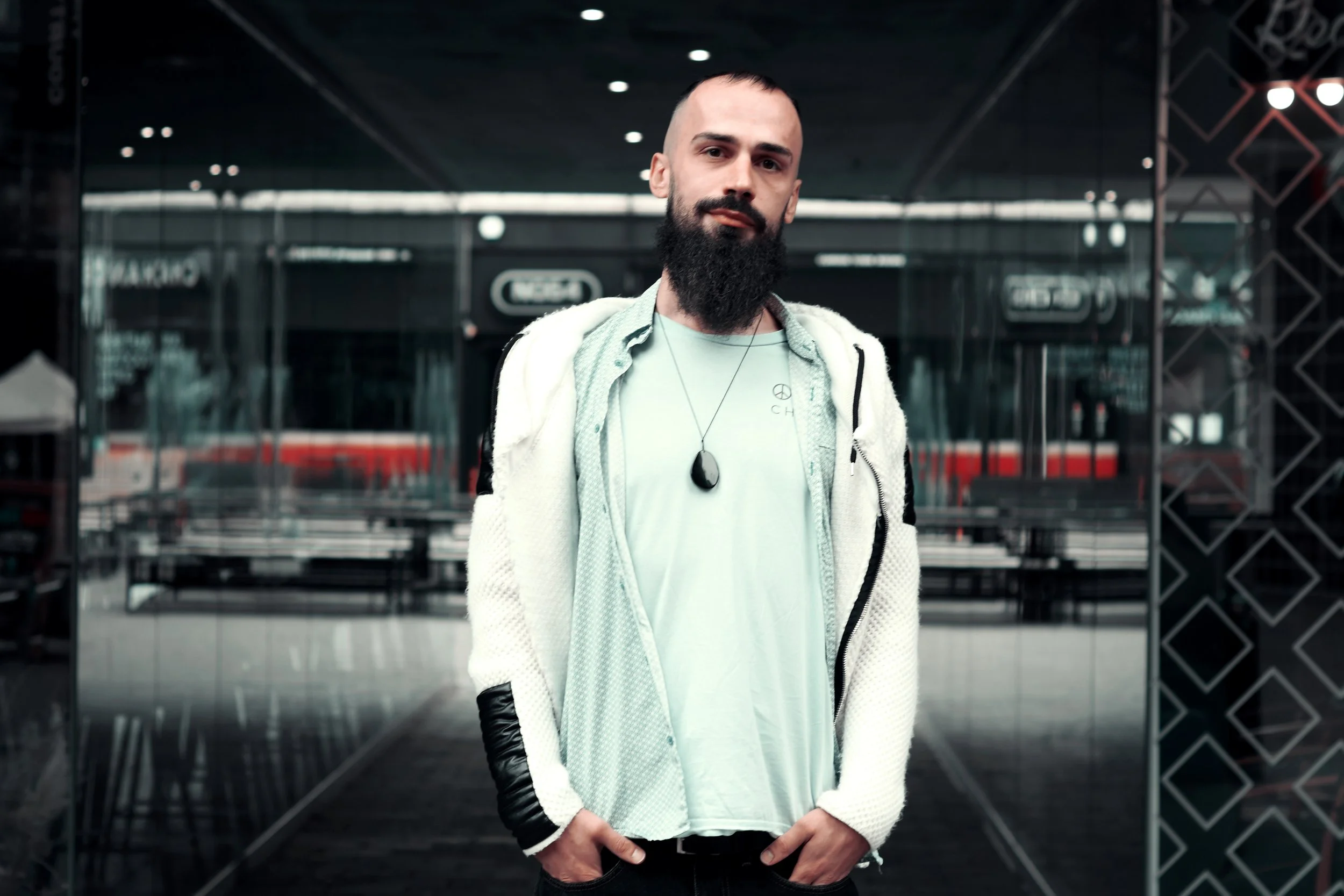
Jan Heller is the founder of Tracksuit Yogi and creator of the Life After Care programme. What sets Jan apart is not just the teaching it's the depth of personal practice behind it. Thirteen years of Advaita Vedanta practice under teacher Mooji sit alongside eight years on the frontline of care: children's services, adult mental health, autistic children, elderly care. That combination shaped a calm that isn't a personality trait but a trained skill, built long before it became a teaching practice. Non-dual awareness isn't a technique Jan delivers. It's how Jan lives.
8 years frontline care experience (children's, adult mental health, elderly care)
CMA accredited meditation teacher with 6 years teaching experience
Specialist in nervous system regulation and non-dual awareness practice
Works with high-performing individuals and organisations under sustained pressure
Grounded in the neuroscience, and in the lived experience of deep practice
Designed specifically for social care, not adapted from a corporate programme
Featured guest, Episode 1 of The Frontline Edit podcast — listen on Spotify
Speaking on mental health in care at Royal Educare's Summer Networking Event, Pen Y Bont Football Club, 3 July 2026
"I'm not here to teach your team how to cope. I'm here to help them discover they don't have to be depleted by the work they love."
Ready to give your team
something that actually works?
Book a no obligation discovery call below.